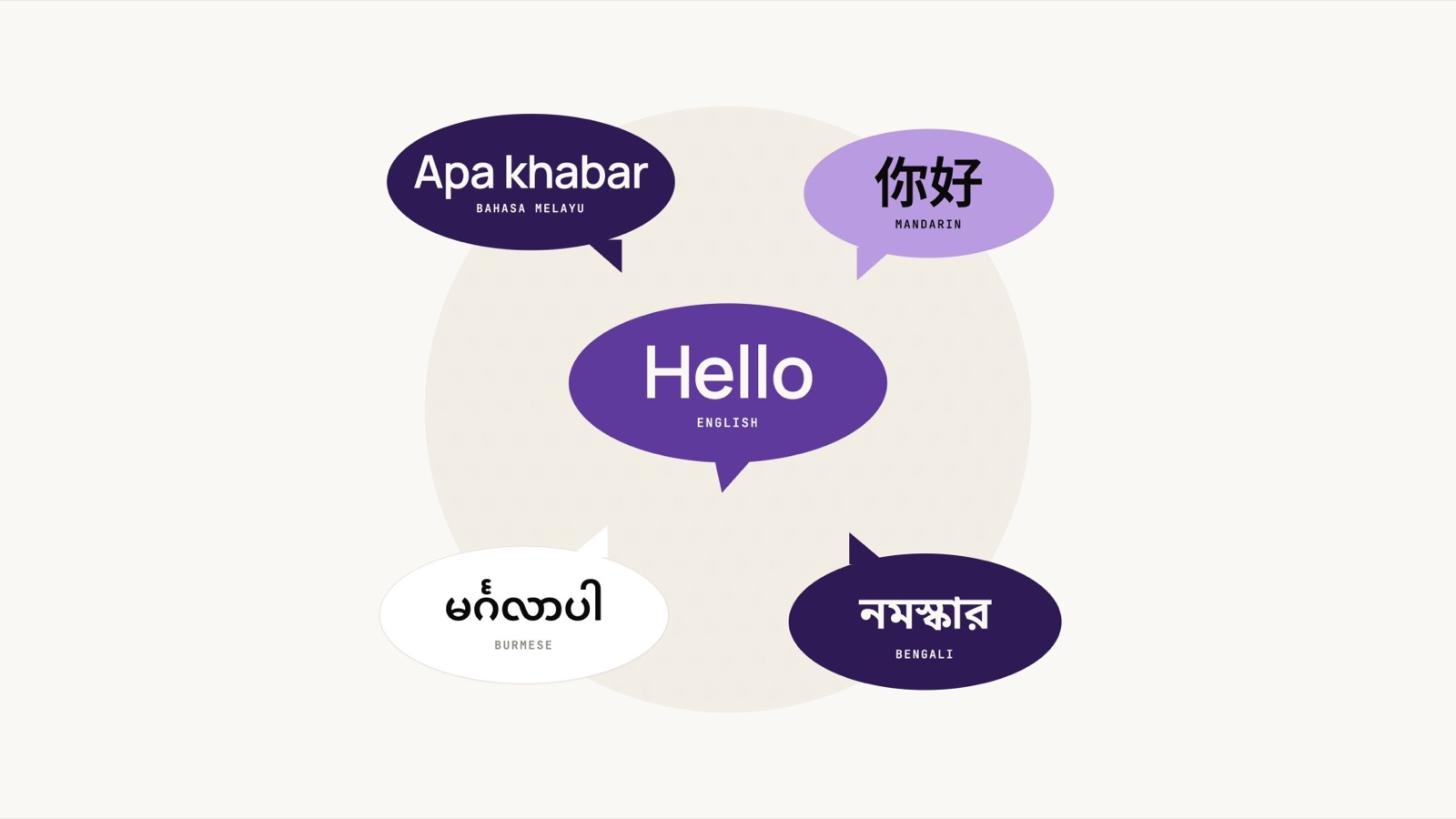
Most Malaysian operations of any size already run on mixed crews. One outlet, ward, production line or housekeeping floor can hold several first languages, several levels of schooling, and a few people who read slowly in any language at all. Operations leaders know this. What goes unexamined is that the training built for those teams is still produced in one language, in continuous prose, by people who read fluently for a living.
The usual accommodation is a translation. The SOP goes to someone bilingual, comes back in Bahasa Malaysia or Nepali, and gets distributed alongside the original. That is better than nothing, and it is also where most organisations stop. The document is now readable in two languages by anyone who has twenty minutes and the habit of reading documents. That describes almost nobody on an evening shift.
Why a translated document is not the same as training someone can use
Malaysian employers are not asked only to make procedures available in writing. Section 15(2)(c) of the Occupational Safety and Health Act 1994, as reprinted on 1 June 2024, requires the provision of “such information, instruction, training and supervision as is necessary to ensure, so far as is practicable, the safety and health at work of his employees”. The obligation is to instruct and to train, in a form that works for the people in front of you. A translation only addresses which words are used; it does not address length, reading level, or whether the person has any realistic chance to sit and read.
Other regulators have been explicit about where that leads. The United States Occupational Safety and Health Administration set out its position in a training standards policy statement on 28 April 2010: “an employer must instruct its employees using both a language and vocabulary that the employees can understand”, and where an employee does not speak or comprehend English, “instruction must be provided in a language the employee can understand”. The same statement closes the loophole most organisations are quietly relying on: “if employees are not literate, telling them to read training materials will not satisfy the employer’s training obligation.”
What it looks like when the training reaches the file but not the person
In June 2025, the UK meat processor C & K Meats Limited was fined £140,000 after a worker lost part of a finger using hydraulic cutters, in an incident dating back to April 2022. Among the findings, the Health and Safety Executive recorded that training for the task “was also only provided in English, including for migrant workers for whom English may not have been their first language”. HSE restated the duty plainly: employers must provide “information, instruction, training and supervision in an understandable format for all workers, irrespective of their national origins, first language, or literacy.”
The operational lesson is not that the company had no training. It had training, and it had a record of having delivered it. What it did not have was evidence that the person doing the task had understood it. That distinction is the whole problem, and it is invisible in any system that records delivery rather than comprehension.
Decide which language each role needs, not which language the company uses
Start from the roles, not the head office default. A kitchen crew, a housekeeping team and an outlet manager may need three different languages, and the manager may be the only one who genuinely needs the English version, because they are the one who escalates and files. Translating everything into everything is expensive and usually unnecessary. Translating the material that governs an actual decision, into the language of the people making it, is neither.
Replace sentences with pictures of your own workplace
For anything procedural, a photograph of the correct setup beats a paragraph describing it, and one taken in your own outlet beats a stock image. Where a step has a right and a wrong state, such as a chemical on the correct shelf, a guard in position or a trolley loaded to the correct height, show both. This is less a concession to low literacy than a recognition that a picture survives translation intact, while a sentence acquires a fresh set of problems each time it is rendered into another language.
Check understanding in the language the person was trained in
A translated module paired with an English assessment tests reading comprehension, not procedural knowledge. Keep the question in the same language as the material, and ask what the person would do rather than what the rule says. A scenario question also catches translation errors that proofreading does not: when one language group consistently chooses the same wrong option, the likely cause is not that group, it is that version.
Keep every language version tied to the approved source document
The approved SOP remains the source of truth, and each translated training version needs to carry the version number of the document it came from. Otherwise a revision creates a quiet drift in which the English version has been updated and two translations have not, and nobody can tell which crews were taught which rule. Any review of the source document has to trigger a review of every language version derived from it, not just the original.
Use supervisor observation for anything done with the hands
Training in the right language can explain a procedure, deliver one consistent version to every shift, test whether someone understood it and record who was assessed on what. It cannot establish that a person can actually isolate a machine, operate a cutter, lift a patient or handle a knife safely. For physical work the module confirms the knowledge and a supervisor still has to watch the task performed. The HSE findings above named supervision alongside instruction, and both halves have to be answered.
What improves once the training is in the right language
Understanding stops being an assumption. Gaps surface as wrong answers attached to a specific language group, outlet or shift, which is actionable, rather than as an incident months later. New hires who do not read English become productive without waiting for a bilingual colleague to be free. And when a regulator, client or auditor asks how you know a particular worker understood a particular procedure, the answer is an assessment they took in a language they read, not a signature on an attendance sheet.
How Wisteria supports this
Wisteria is built for this sequence. Wisteria Scan checks connected sources and flags documents that are new or revised, so a change does not wait for someone to notice it. AI then drafts the flashcards and check questions in the languages your crews actually read, so the translated version and its assessment arrive together rather than months apart. Your trainer reviews, corrects and approves every language version before it reaches staff: automatically found, human approved, which matters most here, because a fluent wrong translation of a safety step is more dangerous than an obvious gap. Approved versions reach the relevant roles on the phones employees already carry, so every shift and language group gets the same content. Assessments show understanding rather than attendance, and when the source is revised, every version derived from it can be reviewed and reassigned.
What to do next
Send us one SOP, whether a safety procedure, a service standard or a policy update, whatever is currently in circulation, and tell us which languages your crews actually read. We will show you a set of sample flashcards and check questions built from that document, so you can judge the approach on your own material before deciding anything.
Carmen Lee — Instructional Designer, Wisteria
Six years in the training industry, and someone who cares about frontline learning.